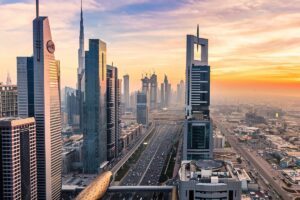
Dubai leads globally in innovation and ambition, with new mega-projects poised to transform its real estate and lifestyle. These projects highlight Dubai’s vision as the world’s most futuristic, sustainable, and luxurious city. In this article, we explore the details of Dubai’s mega-projects.
Table of Contents
ToggleThe Future Begins in Dubai
Over the last few decades, Dubai has earned its reputation as a land of skyscrapers, artificial islands, and record-breaking achievements. But the story doesn’t stop there. The next few years, especially 2025 and beyond, are set to mark another major transformation. From massive eco-friendly developments to futuristic towers and man-made marvels on the sea, Dubai continues to imagine what other cities might consider impossible.
These projects go beyond constructing massive buildings; they enhance daily life, work, and social connections. Each initiative integrates sustainability, advanced technology, and premier design, setting global standards for cities. Here’s a concise overview:
- Palm Jebel Ali
- Dubai Creek Harbour & Tower
- Al Maktoum International Airport
- Urban Tech District
- Dubai Green Spine
- Dubai Reefs
- Marsa Al Arab
- Burj Binghatti by Jacob & Co.
- Burj Azizi
- Revamped Beaches (Mamzar/Jumeirah 1)
- The Loop
Palm Jebel Ali – Dubai’s Comeback Island
One of the biggest and boldest projects making a comeback is Palm Jebel Ali, developed by Nakheel. Twice the size of Palm Jumeirah, this artificial island will feature 16 fronds and over 90 kilometers of beachfront. The new design includes luxury villas, eco-friendly resorts, marinas, and leisure areas powered partly by renewable energy.
- Why It Matters: Palm Jebel Ali symbolizes sustainable luxury. It supports Dubai’s 2040 Urban Master Plan with smart connectivity, pedestrian pathways, and green building materials.
- Investment Potential: The limited number of beachfront villas ensures long-term value, making it one of the most promising real estate investment zones in 2025.
Dubai Creek Tower and Dubai Creek Harbour – The City’s New Icon
Dubai Creek Harbour, a master development by Emaar, continues to expand as a “city within a city.” At its center will rise the Dubai Creek Tower, designed by world-famous architect Santiago Calatrava.
Inspired by a lily flower, the tower blends beauty and engineering brilliance. While its final height remains unannounced, it’s expected to exceed the Burj Khalifa and feature sky gardens, 360-degree observation decks, and event spaces suspended in the air.
- Why It Matters: The project reflects Dubai’s daring spirit and architectural leadership.
- Impact on Real Estate: With waterfront homes, luxury hotels, and retail hubs, Creek Harbour is set to rival Downtown Dubai and become the new “heart of the city.”
Al Maktoum International Airport Expansion – The World’s Largest Hub
Dubai’s next airport revolution is already underway. The Al Maktoum International Airport in Dubai South will soon become the largest in the world. Designed to handle over 260 million passengers annually, it will be five times the size of today’s Dubai International Airport.
- What’s New: Expanded runways, new terminals, smart gates, and luxury lounge experiences make travel seamless and eco-efficient.
- Economic Impact: This project will redefine Dubai as a global hub for logistics, business, and tourism. It will also spark enormous real estate growth in nearby districts like The Pulse and South Bay.
The Urban Tech District – Dubai’s Innovation Hub
Located in Al Jaddaf, the Urban Tech District will serve as a global headquarters for sustainability and urban innovation. It will host offices, research labs, and renewable-energy facilities for over 4,000 tech pioneers.
- Special Features: The entire area will run on renewable energy, with electric transport and vertical gardens.
- Mission: To attract global talent and make Dubai a global leader in smart-city technologies and green development.
Dubai Green Spine – Where Nature and City Meet
As part of the Dubai 2040 Urban Master Plan, the Dubai Green Spine project will convert 64 kilometers of Sheikh Mohammed bin Zayed Road into an eco-friendly corridor.
- Features: Lush green parks, walking and cycling paths, shaded resting areas, and playgrounds.
- Why It’s Important: It offers a step forward in sustainable urban planning by promoting healthier lifestyles and reducing car dependency.
Dubai Reefs – The City Beneath the Waves
In one of its most futuristic plans, Dubai is launching the Dubai Reefs project, a floating marine city designed to protect sea life and promote eco-tourism. Covering 77 square kilometers of ocean, this floating district will feature homes, hotels, research centers, and 400,000 cubic meters of artificial reefs.
- Goal: Restore marine habitats, attract divers and eco-tourists, and create homes that harmonize with nature.
- Long-Term Impact: It positions Dubai as a global leader in sustainable oceanic living.
Marsa Al Arab – The New Waterfront Wonder
Next to the Burj Al Arab, Marsa Al Arab is a pair of man-made islands that merge luxury, leisure, and entertainment. It will feature a super-luxury resort, a marine park, theaters, and a private yacht marina.
- Key Highlights: Floating villas, beachfront malls, and a private marina club.
- Tourism Boost: Expected to draw millions of tourists each year, enhancing Dubai’s position as a top holiday destination.
Burj Binghatti by Jacob & Co. – When Architecture Meets Jewelry
Burj Binghatti, located in Business Bay, is a partnership between developer Binghatti and luxury watchmaker Jacob & Co. The building will rank among the tallest residential towers globally.
- Design Concept: Every apartment resembles a jewel box, designed with diamond-inspired architecture.
- Market Appeal: Appeals to ultra-luxury buyers seeking branded residences with unmatched exclusivity.
Burj Azizi – Dubai’s New Skyline Masterpiece
Standing at 725 meters tall, Burj Azizi will soon become another dominant structure in Dubai’s skyline. Positioned on Sheikh Zayed Road, this mixed-use project includes residential units, a shopping mall, and a seven-star hotel.
- Notable Features: Sky observation decks, multicultural restaurants, and vertical entertainment facilities.
- Why It Matters: This project adds a modern landmark to Dubai’s ever-growing roster of architectural icons.
Revamped Beaches – Al Mamzar and Jumeirah 1
To make Dubai’s beaches more vibrant and climate-resilient, Al Mamzar and Jumeirah 1 are undergoing a complete transformation.
- Plans include: New walkways, parks, fitness areas, and energy-efficient waterfront designs.
- Benefit to Residents: A more inclusive and green coastal lifestyle aligned with global sustainability standards.
The Loop – A 93-Kilometer Climate-Controlled Path
URB’s “The Loop” is a futuristic idea designed to connect Dubai’s neighborhoods with a temperature-controlled walkway and cycling path that stretches for 93 kilometers.
- Core Vision: To promote fitness, sustainability, and year-round connectivity even in warm seasons.
- Urban Significance: Encourages people to cycle and walk instead of drive, cutting down on pollution.
Real Estate and Investment Outlook
All these mega-projects are part of Dubai’s larger goal to create a diversified, resilient economy built around innovation, hospitality, real estate, and green living.
- Property demand in areas like Dubai South, Creek Harbour, and Palm Jebel Ali is already surging.
- Off-plan investments are now seen as long-term opportunities because these cities within cities offer modern amenities, sustainability, and high ROI potential.
- Luxury, sustainability, and connectivity are key trends defining Dubai’s real estate future.
For more information contact us
Conclusion
Dubai’s mega-projects prove that the city’s ambition knows no limits. From sky-piercing towers to vast eco-friendly communities and underwater wonders, every project adds a new chapter to the city’s evolving identity.
By 2030, Dubai will not only boast new landmarks, but it will stand as a symbol of sustainable innovation, setting an example for how cities of the future can balance progress with preservation. For investors and residents alike, this is the moment to look ahead and be part of a city that keeps reinventing tomorrow.
FAQ
1. Why is Dubai investing in so many mega-projects?
Dubai’s leadership wants to build a future-ready economy, attract global investors, and ensure long-term sustainability. These projects also create thousands of local jobs and showcase Dubai’s readiness for technology and tourism-driven growth.
2. Are these projects eco-friendly?
Yes. Many new designs focus on renewable energy, reduced emissions, and sustainable architecture. Examples include Dubai Reefs, Green Spine, and Urban Tech District.
3. Which projects are best for investment?
Top investment areas include Palm Jebel Ali, Dubai Creek Harbour, Dubai South, and Business Bay because of high demand and limited luxury supply.
4. What’s unique about Dubai Creek Tower?
It’s not only taller than Burj Khalifa but will also offer multi-level sky platforms with 360° city views and gardens suspended in the air.
5. When will Palm Jebel Ali be ready?
Construction has resumed, with the first range of villas expected to be completed by 2027, marking a major expansion of Dubai’s coastal lifestyle options.