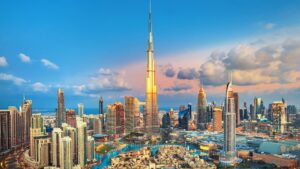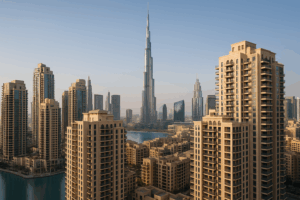
Dubai is leading a disruptive transformation in real estate, where smart home technology is no longer a futuristic promise but a present-day standard. As the city races towards its vision outlined in the Dubai 2040 Urban Master Plan, innovations in artificial intelligence (AI), the Internet of Things (IoT), and sustainability are redefining what it means to live, invest in, and thrive in a modern city. This article examines how Dubai’s real estate landscape is evolving to meet the demands of the smart living era, focusing on design, technology, lifestyle, investment, and environmental sustainability.
Table of Contents
ToggleThe Smart Home Revolution: Defining Features of 2025
Here are the most important features:
1. Integrated AI and Predictive Automation
The contemporary households of Dubai are equipped with AI systems that regulate climate, lighting, appliances, and shades. These platforms learn a resident’s daily routine and adjust the surroundings for maximum comfort with minimal energy use. For example, houses can control temperature and humidity based on weather and occupancy. All processes are managed through smartphone apps or by voice commands in multiple languages. Much of this “smart” functionality works silently in the background, removing the need for remotes or wall panels. The result is truly intuitive and invisible automation.
2. Security and Peace of Mind
Home security has reached new heights. Smart home solutions employ biometric locks (like facial recognition or fingerprints), AI-monitored surveillance cameras, and real-time alerts. Dubai’s newest systems even offer 24/7 monitoring centers that connect directly with Dubai Police for instant emergency response. Mobile integration allows remote control over security and monitoring, ensuring that property owners, especially international investors, can manage their assets from anywhere in the world. These features are not exclusive to luxury districts; developers now equip even new affordable homes with smart locks, alarm integrations, and advanced sensors as standard.
3. Energy Management and Sustainability
Sustainability is central to Dubai’s smart home market. Households equipped with AI-powered thermostats, energy-efficient appliances, and automated lighting consistently cut water use and energy bills, sometimes by up to 40%. Integration with solar panels, energy monitoring dashboards, and automated blinds maximizes renewable energy use and minimizes waste. Concepts like net-zero-energy homes, showcased in projects at the Mohammed Bin Rashid Solar Park, are being scaled across communities. Dubai’s government has also incentivized the move, requiring new developments to adhere to green building standards and rewarding the integration of energy-efficient technologies.
Next-Level Living: Sensory Experiences and Personalization
Here are the features of smart homes in Dubai:
- Multi-Sensory Environments
Smart homes have evolved beyond touch and voice control. Today, the newest systems include adaptive lighting, haptic flooring, AI scent diffusers, and acoustics that shift with activities or moods. Moreover, some projects even test brain-computer interfaces (BCIs), allowing residents with disabilities to control their homes with neural signals—ultimately, a major step for accessibility.
- Smart Kitchens and Appliances
Dubai’s luxury developments often include kitchens equipped with self-learning ovens, AI-powered refrigerators, and robotic helpers that assist with meal preparation, shopping lists, and daily nutrition management. The kitchen now acts as both a culinary studio and a wellness hub.
Investment, Value, and Market Shifts
For investing money, consider these tips:
1. Premium on the value of the property
Advanced smart features in properties commonly attract an upcharge of 10-25 percent over the regular houses. International customers and local professionals who want intelligent, interconnected living areas have the highest demands, and they are supported by the image of Dubai that has been built up as innovative, secure, and sustainable.
2. Rental and ROI benefits
Smart homes with smart capabilities are generating 6-8 percent rental yields in a year, as compared to the rest of the market. It is valued by investors on the potential of its long-term growth, alongside the fact that the digital-savvy residents of Dubai and corporate expats increasingly view future-ready rental apartments as a key priority.
3. New tech-integrated Developments
Key developers- Emaar, Sobha, DAMAC– implement full-home automation, app-managed systems, and metropolitan-level integrations in typical communities such as Dubai Hills Estate, District 2020, Tilal Al Ghaf, and so on. Terms like sustainability, AI, and wellness are not just fads; they are essential to all the new blueprints.
Sustainability and Dubai’s Green Goals
Smart homes are essential to Dubai’s broader sustainability and urban resilience agenda. By leveraging automation, systems can cut household energy use by 30–40% and water consumption by 20–25%. Consequently, these savings, at the city-wide level, have a transformative effect on utility grids and environmental targets. Moreover, homeowners can monitor real-time usage, schedule heavy-draw appliances for off-peak hours, and even feed excess solar energy back to the grid, thereby aligning personal savings with Dubai’s collective environmental aspirations.
Challenges, Barriers, and Tomorrow’s Solutions
Although smart homes are great, there are some challenges:
1. Integration
With the proliferation of brands and proprietary technologies, seamless system integration has become a significant challenge. Consequently, the market is shifting towards open-source and privacy-first platforms. For instance, solutions like Home Assistant operate on local networks, thereby avoiding vendor lock-in and ensuring that data remains private.
2. Cybersecurity Risks
Protecting resident data is a high priority as devices multiply. In response, developers and tech vendors continually bolster security layers, encrypt communications, and, in addition, offer local or regional data hosting to comply with new international standards.
3. Cost and Mass Adoption
While smart technology is pervasive in premium properties, cost reduction and standardized fittings are needed for mass-market homes and retrofits. Government incentives, falling technology costs, and a growing ecosystem of certified integrators are accelerating this shift.
Conclusion
Dubai has been leading the world in a residential revolution. In this case, intelligent houses do not involve only devices, but the philosophy of life as they combine digital comfort, health, sustainability, and protection. With the growing capabilities of smart technology, the Dubai real estate market is intended to be a regional and even global leader, just like it has been before, creating a lasting and appealing model of real estate opportunities among property buyers, investors, and inhabitants. The smart home in Dubai is not only a luxury but also a new meaning of the home. If you need help for investing in Dubai real estate, contact us in Arabland.
FAQs
1. How do Dubai’s smart homes offer security beyond traditional systems?
They provide biometric access, real-time camera monitoring, and 24/7 direct integration with law enforcement, all managed remotely.
2. Can older homes in Dubai be upgraded to today’s smart standards?
Absolutely, certified integrators offer retrofit packages, allowing homeowners to add automation, smart lighting, climate control, and security upgrades to older villas or apartments.
3. Are smart homes only practical for the wealthy in Dubai?
No. While luxury properties led the trend, affordable developments are now standardizing key smart home features thanks to government incentives and falling tech costs.
4. Do smart homes really contribute to sustainability in a desert city like Dubai?
Yes. Automated energy, climate, and water management systems have proven to cut resource consumption significantly, helping both residents and the city meet ambitious sustainability goals.
5. What trends define the next generation of smart homes in Dubai?
Expect multi-sensory environments, AI-driven personal wellness, energy-positive buildings, open-source platforms for privacy, and even brain-computer interfaces, making homes smarter, greener, and more inclusive than ever before.